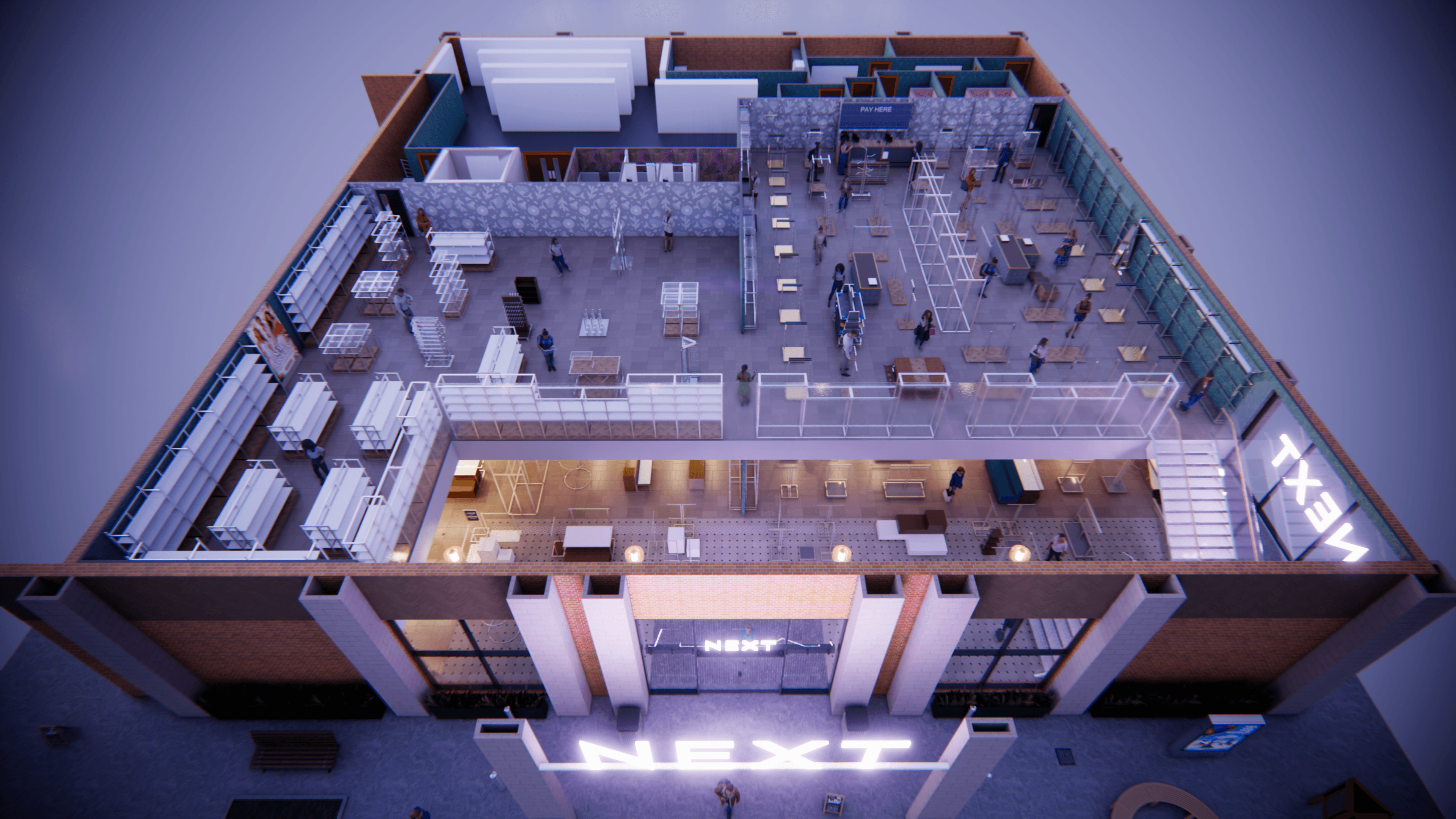
Scan-to-BIM
We transform laser scan data into fully coordinated BIM models tailored to your project requirements. Using advanced laser scanning, we capture millions of data points with millimetre accuracy creating detailed point clouds that form the foundation for precise 3D models revealing structural elements, services, ceiling voids, and spatial constraints.
Scan to BIM is essential for understanding existing site constraints before committing to leases or starting design work. Our models help you evaluate feasibility, plan MEP routes, and avoid design changes during construction. For refurbishments and fit-outs, this upfront clarity prevents costly surprises and keeps programmes on track.
Used by RDS 360 clients for site feasibility studies, lease evaluations, refurbishment planning and as-built documentation.
Coordinated BIM models | Point cloud data | 3D geometry | Architectural & MEP elements | Scan-to-BIM
Digital Twins
We create highly accurate digital replicas of your buildings and assets, providing complete and accessible records for design, planning, and facilities management. Our BIM models don't just look like your building; they hold critical information on materials, components, and performance, helping you make informed decisions.
For property and estates teams managing multiple sites, digital twins provide a single source of truth. They simplify lease negotiations, support cost planning with embedded asset data, and streamline handover to facilities management. As your portfolio evolves, digital twins ensure you always have current, accessible building information, reducing the time and cost of future refurbishments.
Used by RDS 360 clients for portfolio management, facilities management, asset registers and lease documentation.
Data-rich BIM models | Asset information | Maintenance data | FM system integration
Design Coordination & Clash Detection
We use BIM to streamline scheduling, reduce clashes, and improve coordination between stakeholders keeping projects efficient and cost-effective.
Our coordination process identifies and resolves conflicts between architectural, structural, and MEP disciplines before construction begins preventing the costly delays and variations that arise when design issues are discovered on site.
We facilitate coordination meetings with your design and construction teams, producing clash reports and coordinated models that everyone works from.
This collaborative approach improves communication between designers, contractors, and landlords, ensuring aligned expectations and smooth delivery across tight refurbishment programmes and rollouts. Used by RDS 360 clients for refurbishment coordination, MEP planning, design reviews and landlord approvals.
Coordinated 3D models | Clash detection reports | Design review documentation
BIM for Project Delivery
At RDS 360, BIM is more than just modelling. It's about delivering smarter, data-driven solutions that add value at every stage of the project. We create visual models, walkthroughs, and presentations that help stakeholders understand proposals, secure approvals, and make confident decisions before committing to construction.
For rollout programmes, BIM provides templates and standards that can be adapted across multiple sites, maintaining consistency while accommodating site-specific variations. This reduces design time, controls costs through standardisation, and ensures predictable delivery.
At handover, we provide structured asset information and as-built models that integrate with your facilities management systems. Used by RDS 360 clients for stakeholder presentations, contractor tendering, construction sequencing and FM handovers.
3D visualisations | 4D construction sequencing | 5D cost planning | Phasing plans | As-built models | Automated Scheduling
FAQ
Here’s everything you need to know before working with us.
What is BIM, and why do I need it?
BIM (Building Information Modelling) enables the creation of a data-rich digital model of your space. This enhances accuracy, coordination and collaboration among stakeholders (designers, contractors, landlords etc.), leading to better outcomes and fewer surprises during delivery. Our BIM capabilities are part of our survey and technical services.
How does BIM benefit my project?
BIM is a digital, data-rich representation of a building. It improves four key things: Accuracy and coordination; Collaboration between stakeholders; Clash detection and risk reduction; Decision-making early in the process. For our clients projects, BIM supports faster delivery and more predictable outcomes.
Do I need BIM for a project?
While BIM isn’t always mandatory, it is increasingly expected by landlords, developers and contractors. BIM provides better control over space, assets and data, it is especially valuable for roll-outs and repeat formats.
Can BIM models be used for asset management?
Yes. Our BIM models can be structured to support ongoing asset management, allowing clients to maintain accurate records of layouts, fixtures and building information long after the project is complete.
What is 3D modelling used for?
We create accurate 3D models of existing buildings based on survey and laser scan data. These models are used for: Design development; Space and store planning; Coordination with landlords and contractors; Planning and technical approvals.
What software do you use for 3D modelling?
We work with industry-standard platforms including Revit, AutoCAD, Sketchup and other BIM-compatible tools, ensuring our outputs integrate seamlessly with clients, consultants and contractors.
What level of detail can you model to?
We tailor the model to suit your needs, from simple shell models to highly detailed BIM models including walls, floors, ceilings, services and fixed elements. The level of detail is agreed at the outset to ensure the right balance of accuracy and efficiency.
Ready to Reduce Project Risk?
BIM gives you the clarity and control needed to deliver projects confidently. Whether you're evaluating sites, planning refurbishments, or managing portfolio rollouts, our BIM services minimise risk and keep projects on track.